
Pink Pomelo Retail Buying: Plan Sell-Through and Reorders
Use a small retail pilot to separate customer sales, usable stock and losses. Build a pink pomelo reorder plan from observed demand rather than carton price alone.
Pink pomelo retail buying becomes easier when the buyer measures what happens after the cartons reach the store. A low purchase price is not enough if fruit remains unsold, the size mix does not match customer demand, or repeated handling increases losses. Use a defined pilot period to decide how much to reorder and which offer customers actually select.
Start with one clear retail offer
Choose the selling unit: whole fruit by piece, whole fruit by weight, or a separately managed prepared product. Record the selling price, display location, staff description and promotion dates. Comparing two suppliers while changing all of these conditions at once makes the result difficult to interpret.
For a whole-fruit trial, keep the carton count and size information available to the store team. A larger average fruit may change the customer's total purchase cost even when the kilogram price is unchanged. Capture requests for smaller or larger pieces as observations, not as proof of a permanent market preference.
Keep a daily stock reconciliation
- Opening usable fruit and additional deliveries.
- Units or kilograms sold, with full-price and discounted sales separated.
- Fruit removed from sale, with a recorded reason.
- Closing usable stock and any stock held for a decision.
Use one unit consistently. If the till reports kilograms but the warehouse counts pieces, retain the weights needed to reconcile them. Do not put unexplained differences into “waste” automatically. A counting error, transfer to another shop and damaged fruit require different corrections.
Calculate sell-through without hiding losses
Consider a hypothetical delivery of 100 fruit with no additional receipts. During the pilot, 62 are sold, 8 are removed from sale and 30 remain usable. Sell-through against the delivery is 62%, while removal is 8%. Calling the combined 70% a sales rate would conceal the loss. If some of the 62 sold at a discount, report that separately before comparing the economics with another trial.
These numbers explain the method; they are not typical pomelo performance or a HAFAMEX promise. Record the observation period and any days when the display was empty. A stockout can suppress recorded sales, while a one-off promotion can temporarily raise them. Neither should become the normal reorder assumption without review.
Turn observations into a cautious reorder
If the current usable stock is 30 fruit and the working sales estimate is 10 per day, the arithmetic gives three days of demand cover. It does not prove three days of remaining quality. Compare both demand cover and the stock's assessed condition with the next feasible delivery date. Exclude fruit already held for review from the usable quantity.
For stores in Singapore, Malaysia or another destination, use their own pilot results rather than borrowing a national sales assumption. Agree a review date with the supplier and identify the change being tested next: delivery size, fruit size mix, display message or replenishment interval. Changing one main variable at a time gives the next order a clear learning objective.
Send your pilot results and proposed replenishment pattern through the HAFAMEX Pink Pomelo page. Ask which lot and delivery terms can be confirmed for the next order.
Continue with the guide to pomelo carton count and net weight.
Other language versions: Tiếng Việt · 简体中文 · العربية.
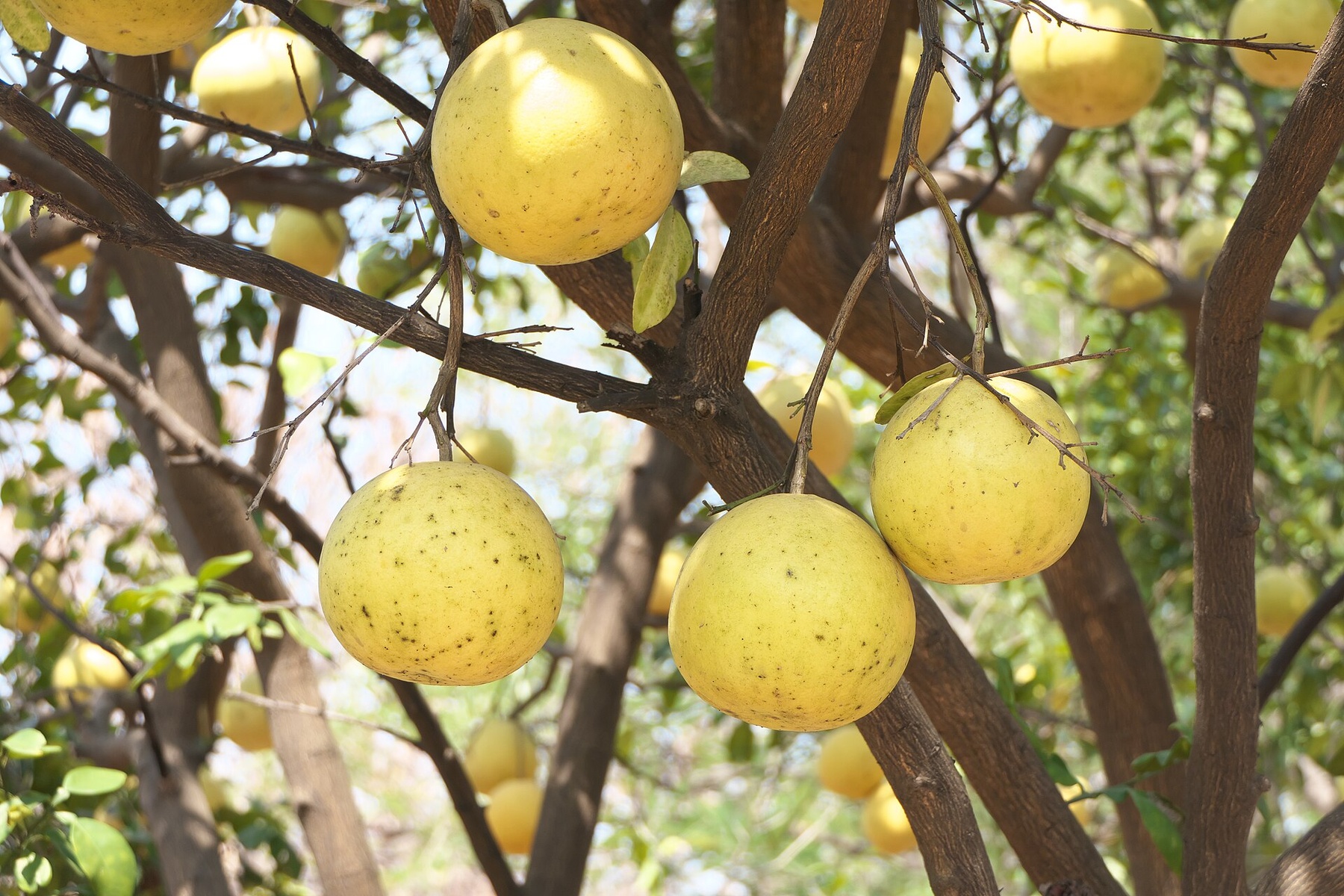
Illustrative photograph: Dinesh Valke from Thane, India — Citrus maxima (Burm.) Osbeck (51008855811).jpg · Source · CC BY-SA 2.0. Resized and orientation normalized for website display.


