
Passion Fruit Pulp Sieving: Test Seeds and Throughput
Evaluate a sieve or separation method using the pulp your operation will handle. Record retained material, useful output, operating time and cleaning before choosing equipment.
Passion fruit pulp sieving is an equipment and preparation decision. The right result depends on whether the recipe keeps seeds, removes them or requires another defined texture. Do not choose a sieve only because it produces more material on one trial. Check whether that output meets the application brief and whether the method can be operated and cleaned consistently.
Define the material entering and leaving the sieve
Identify the input as prepared pulp with its actual seed content and preparation history. It is different from whole-fruit purchase weight. Describe the accepted output in practical terms, including the permitted seeds or particles and the intended recipe. Keep appearance, texture and safety requirements distinct.
Ask the equipment supplier for the material and operating information relevant to the proposed use. The trial should follow appropriate food-contact, hygiene and equipment-safety procedures. This guide does not prescribe a mesh size, pressure or treatment suitable for every passion fruit lot.
Change one operating choice at a time
Compare a defined reference method with one proposed change, such as a different screen or a documented operating sequence. Keep the pulp sample, input quantity and acceptance test comparable. Record operator intervention rather than describing the process as automatic when staff repeatedly assist it.
- Input lot and preparation method.
- Equipment and screen identification.
- Quantity processed and operating observations.
- Passed material, retained material and unaccounted residue.
- Run time, setup, interruptions and cleaning time.
Reconcile the material balance
In an illustrative test, 1.20 kilograms of pulp enters the process. The measured output is 0.84 kilograms passed through, 0.30 kilograms retained and 0.06 kilograms unrecovered. Those quantities add to the original input. Do not describe all retained material as seeds without examining what it contains.
Unrecovered material may include residue on equipment or another recorded loss, but its cause should be investigated rather than assumed. Keep measurement uncertainty and any spilled or sampled material visible. The example is a bookkeeping method, not a normal extraction rate or HAFAMEX product specification.
Compare usable performance, not speed alone
Evaluate the passed material in the intended application. A faster run may leave more seed fragments than the recipe accepts, while a slower method may consume too much labour. Include setup and cleaning when estimating the operating burden; a short demonstration run can hide a long changeover.
Repeat the selected method with a suitable trial scale and more than one relevant sample before setting a planning rate. Record which input changes would require another test. The final recommendation should name the equipment, preparation and output criteria that were actually evaluated, rather than promising one throughput figure for every future fruit shipment.
Describe the fresh-fruit application and pulp-preparation trial through the HAFAMEX Passion Fruit page when discussing samples; equipment performance must be established by your own process evaluation.
Related guide: Passion Fruit Pulp Yield and Brix: A Buyer Trial.
Other language versions: Tiếng Việt · 简体中文 · العربية.
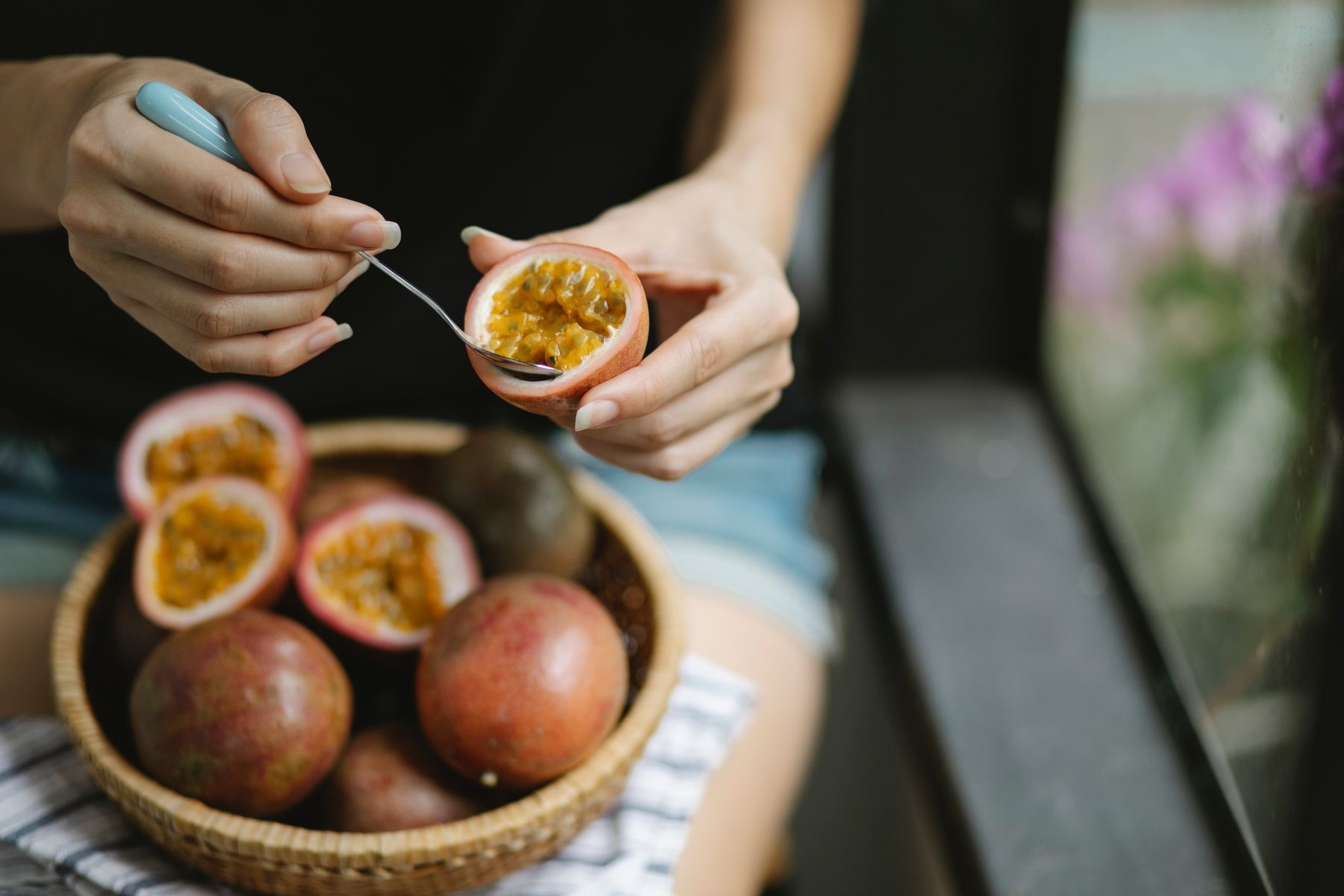
Illustrative photograph: Any Lane — Woman Eating Passion Fruit With Spoon · Source · Pexels License. Resized and orientation normalized for website display.

