
Passion Fruit Pulp Yield and Brix: A Buyer Trial
Run a repeatable passion fruit trial for pulp recovery and soluble-solids readings. Define whether seeds are included, keep measurements traceable and compare flavour separately.
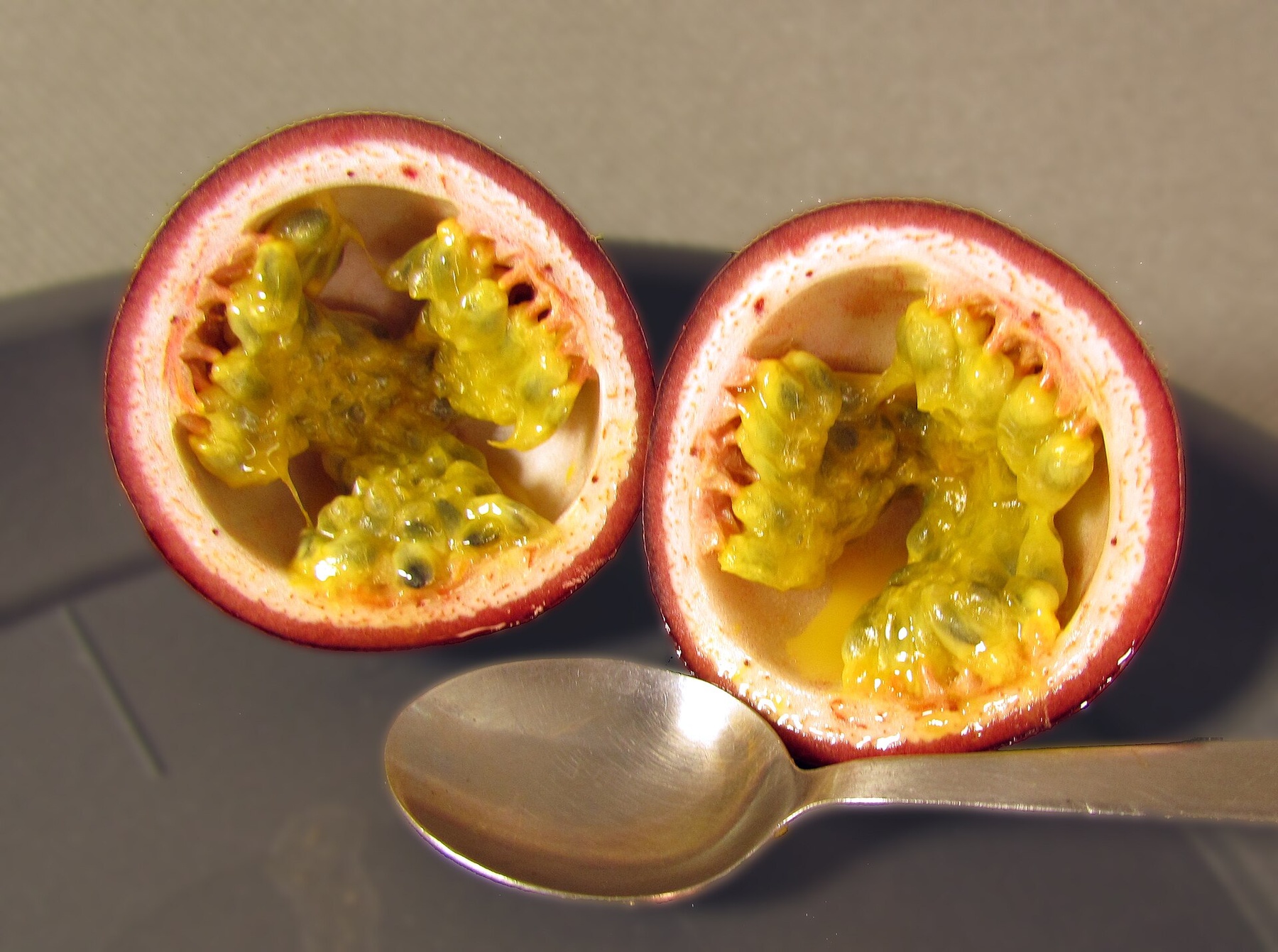
Passion fruit pulp yield and Brix describe different aspects of a buyer sample. Yield measures how much usable material a preparation method recovers. A refractometer reading helps describe soluble solids on the instrument’s Brix scale. Neither result alone establishes flavour, authenticity or the commercial value of an entire lot.
Define the material before weighing
Write down whether “pulp” includes seeds and whether the process uses a sieve, press or another method. Keep tools, preparation steps and the endpoint consistent across samples. Record whole-fruit weight before cutting, then weigh each output separately.
In an illustrative trial, 4 kg of whole fruit produces 1.64 kg of pulp with seeds: a 41% recovery. Further separation produces 1.12 kg of strained material: a 28% recovery from whole-fruit weight. These are different outputs. Comparing the 41% figure with another supplier’s seed-free result would be misleading.
Use a repeatable measurement procedure
- Select and identify samples under the agreed lot-sampling plan.
- Check and use the refractometer according to its instructions, including sample preparation and temperature requirements.
- Record whether the sample was measured individually or as a composite, and note any preparation or dilution.
- Clean the measuring surface between samples and record repeated readings rather than choosing the highest result.
For example, readings of 14.2, 15.1 and 16.0 °Brix show variation in three measured samples. Their simple average is 15.1, but it is not a certificate for the entire shipment. A composited or differently weighted sample may answer a different question.
Assess flavour and process performance separately
Brix should not be treated as a complete taste score or as a direct measure of added sugar. Acidity and aroma also matter. ATAGO’s measurement guidance distinguishes Brix from acidity; use a suitable separate method if acidity is part of the purchasing specification.
For a kitchen or beverage trial, evaluate the intended recipe using documented quantities and comparable conditions. Keep the sample identity attached to yield, readings and sensory notes. Where safety, composition or contractual compliance requires laboratory evidence, a small receiving trial is not a substitute.
Turn results into an agreed buying specification
Compare recovered quantity, variation, flavour and processing effort before choosing a lot. Ask HAFAMEX to confirm the actual fresh-fruit offer and sample arrangements; the example yields and readings here are not promised specifications.
Discuss a fresh-fruit specification with HAFAMEX.
Related buyer guide
Wrinkled Passion Fruit Skin: How to Check Internal Quality
Technical reference: ATAGO: Brix and Acidity Measurement.
Other language versions: Tiếng Việt · 简体中文 · العربية.
Illustrative photograph: Photograph: Frank C. Müller , Baden-Baden — Maracuja mit Loeffel (fcm).jpg · Source · CC BY-SA 3.0. Resized and orientation normalized for website display.


