
Pomelo vs Grapefruit: A Buyer Identification Guide
Avoid specification errors when buying pink citrus. Align the product name, flesh and rind descriptions, sample identification and paperwork before comparing offers.
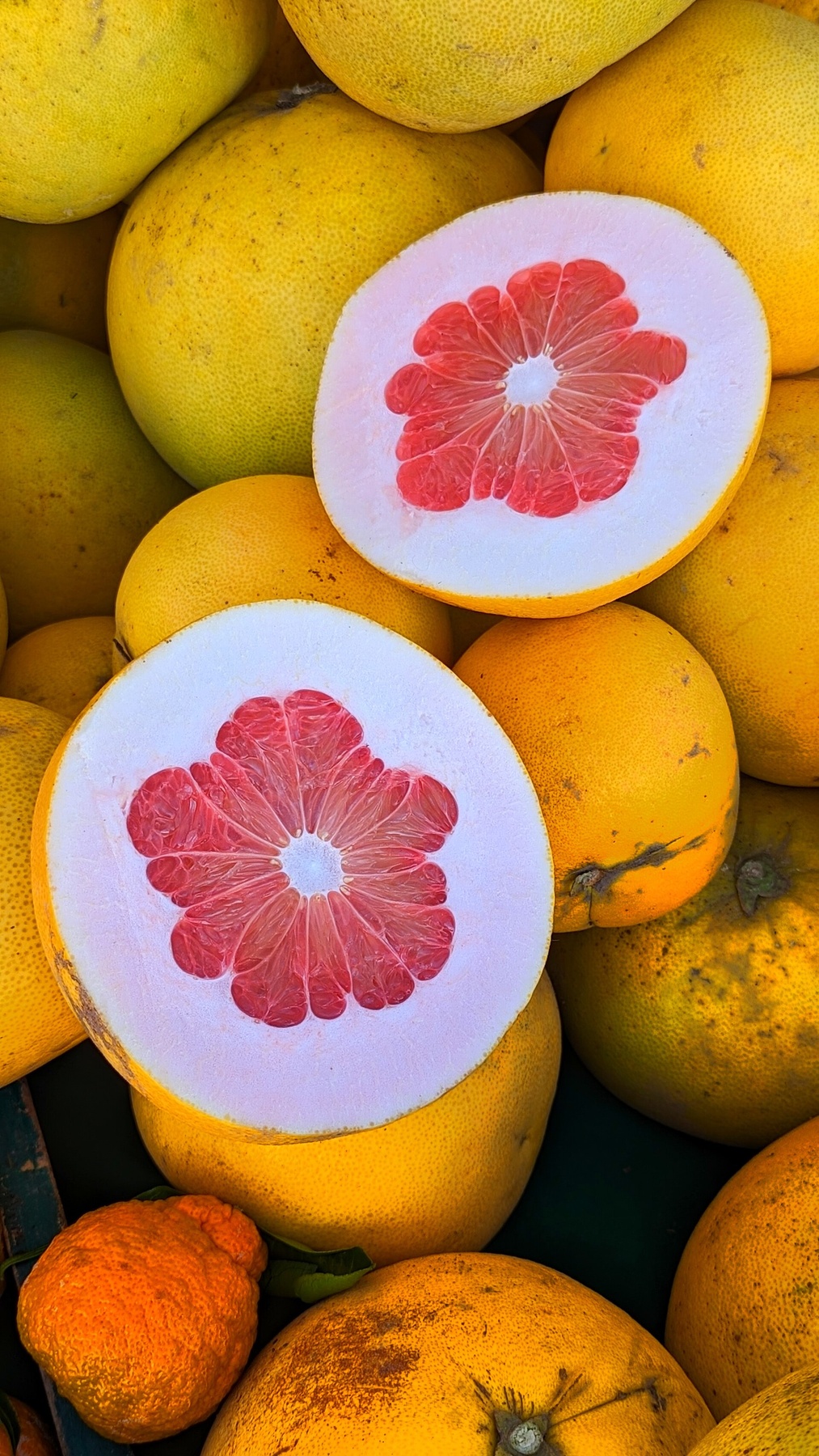
Pomelo vs grapefruit is an important distinction in an international purchase enquiry. A buyer who requests “pink citrus” may receive quotations for different products. Pink flesh alone does not identify the fruit, and a translated catalogue name should not replace a clear specification.
Start with the product identity
The University of Arizona treats pummelo and grapefruit as distinct citrus groups. State the intended product as pomelo, and use the supplier’s documented cultivar name when available. Do not replace pomelo with grapefruit in a quotation, product label or translation simply because both may have pink flesh.
Separate three descriptions: the commercial product name, the rind appearance and the flesh appearance. Green rind and pink flesh can occur together; those colour descriptions do not by themselves establish a named cultivar or country of origin.
Build a sample identity record
- Assign the sample an ID linked to the supplier, date and proposed lot.
- Request photographs of the whole fruit, a cut cross-section and separated segments from that sample.
- Record the supplier’s product and cultivar names exactly, including any local-language name.
- Compare those names with the carton label, specification sheet and quotation.
Physical observations are useful checks, but they are not conclusive cultivar authentication. A buyer should resolve inconsistent records before treating a sample as representative of a commercial order. If origin matters to the transaction, request appropriate lot documentation rather than inferring it from the supplier’s office address.
Make translations refer to the same fruit
Create one short product identity sheet for everyone preparing labels, sales material and purchase orders. It should show the approved product name in the working languages and a reference image of the agreed sample. Preserve cultivar names carefully; avoid adding a familiar local variety that the supplier has not confirmed.
For example, a seller’s “green pomelo” description may refer to rind colour, while the buyer’s “pink pomelo” request refers to flesh colour. Ask for clarification and a cut sample before deciding that the offers are identical or different.
Compare quality only after identity is aligned
Once both parties are discussing the same product, compare size, edible yield, flavour, packing and condition. Agree how substitutions or mixed varieties will be handled. For a HAFAMEX enquiry, provide the intended product description and any sample requirements so that the offered lot can be confirmed rather than assumed.
Discuss a fresh-fruit specification with HAFAMEX.
Related buyer guide
Pink Pomelo Yield: Rind Thickness and Dry Segments
Technical reference: University of Arizona: Grapefruit and Pummelo.
Other language versions: Tiếng Việt · 简体中文 · العربية.
Illustrative photograph: Daderot — Pomelos - San Francisco, CA.jpg · Source · CC0. Resized and orientation normalized for website display.


